
Toyota Chachoengsao


Toyota Ban Pho Plant
This facility represents the production and manufacturing stage of the automotive cycle and serves as a model for modern sustainable industry. Rather than functioning as a conventional factory, the plant operates within a “Bio-Circular-Green” (BCG) ecosystem designed to integrate industrial production with environmental stewardship. The site is anchored by an Eco-Forest—a large reforestation and biodiversity sanctuary that acts as a natural carbon sink while buffering the surrounding community. Sustainability is further supported through extensive solar energy installations, advanced water recycling systems, and waste-to-energy processes that convert manufacturing by-products into power, moving the facility toward a carbon-neutral production lifecycle.
Inside the plant, visitors can observe advanced robotics and high-speed automation operating under the Toyota Production System and its renowned Just‑In‑Time Manufacturing approach, which minimizes inventory, reduces waste, and ensures continuous workflow. Smart manufacturing technologies, including AI and IoT monitoring systems, enable real-time machine diagnostics and predictive maintenance, reinforcing Toyota’s philosophy of “built-in quality.”
Toyota ALIVE Space
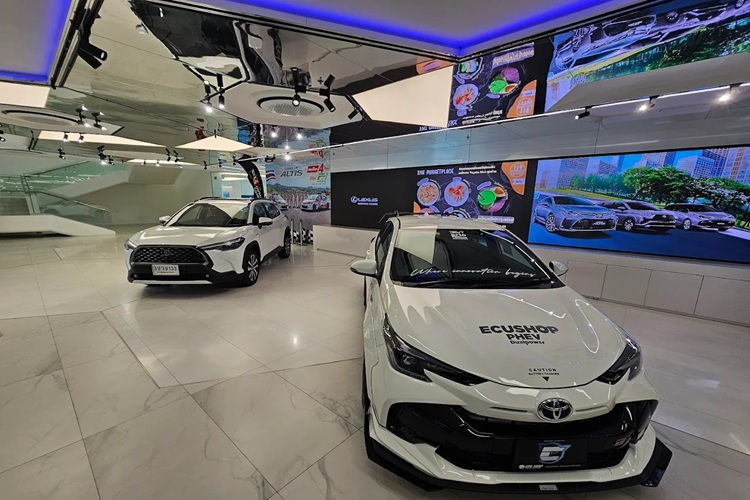
Unlike traditional showrooms, this multi-purpose complex functions as a mobility experience hub designed to showcase the future of transportation. Visitors can explore rotating exhibitions of concept vehicles, hybrid systems, and hydrogen fuel-cell technologies, alongside developments from Toyota’s performance division, Toyota Gazoo Racing. Interactive simulators allow guests to experience advanced safety technologies such as pre-collision systems and driver-assistance features in controlled digital environments.
The facility also reflects a shift in consumer engagement, incorporating co-working spaces, cafés, and lifestyle areas to create a community-focused environment. By presenting vehicles alongside digital services and connected technologies, the center demonstrates Toyota’s “multi-pathway” approach to mobility, where transportation is integrated into broader urban and digital ecosystems rather than limited to vehicle ownership alone.
Together, these two sites highlight broader trends shaping Thailand’s automotive sector. The country remains the largest automotive production hub in Southeast Asia and continues to strengthen its global supply-chain role through innovation, workforce development, and sustainability initiatives. The industry is gradually transitioning from traditional assembly-based labor toward high-skill fields such as robotics engineering, data science, and environmental systems management. At the same time, national policies are accelerating the shift toward electric mobility, particularly through the government’s Thailand 30@30 EV Policy, which aims for 30 percent of domestic vehicle production to consist of zero-emission vehicles by 2030.