
Baan Saladin
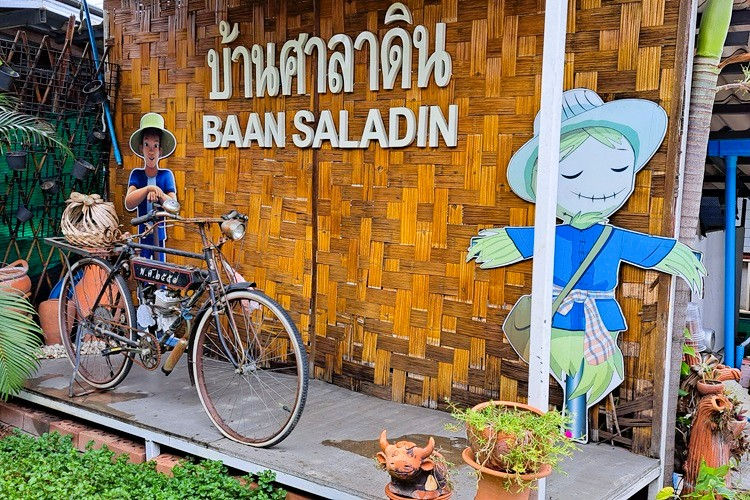


Baan Saladin
The day begins in the rice paddies, where participants walk along raised earthen bunds and observe seasonal cultivation cycles — from seedling nurseries and transplanting to harvesting and threshing. Local farmers explain varieties of Thai rice suited to the floodplain environment, water management techniques, and the cultural importance of rice in Thai society.
Nearby, the Lotus Farm presents another iconic crop of central Thailand. Participants learn about different lotus varieties grown for flowers, seeds, and edible stems. Farmers demonstrate how lotus buds are harvested at dawn for markets and religious offerings, while mature seed pods are processed for snacks and desserts. The visit highlights the botanical structure of the plant and its symbolic role in Thai and Buddhist culture.
At the Gac Fruit Farm, a more specialised agricultural stop, participants are introduced to this bright orange “superfruit,” valued in Thailand for its high beta-carotene and antioxidant content. Farmers explain cultivation techniques, trellising systems, pollination challenges, and product development such as gac juice and health supplements. The session connects local farming to broader discussions on functional foods and niche agricultural markets.
The Orchid Farm showcases Thailand’s global reputation as a leading exporter of tropical orchids. Visitors walk through shaded nurseries filled with vibrant blooms, learning about tissue culture propagation, humidity control, and international flower markets. Both Thai and English explanations emphasise precision farming methods and the economic significance of ornamental horticulture to Nakhon Pathom’s agricultural sector.
Hands-on activities deepen the experience. In the Rice Dessert & Cracker Workshop, participants transform rice into traditional sweets and savoury snacks — such as crispy rice crackers or steamed rice cakes. Guided by community cooks, they explore flavour balancing, natural colouring from pandan or coconut, and the communal aspect of Thai food preparation. This culinary component demonstrates how staple crops are creatively diversified into value-added products.
Environmental responsibility is highlighted in the Grease Trap Workshop, where villagers demonstrate how simple household grease traps are constructed and maintained to prevent wastewater pollution in canals. Participants learn practical techniques for separating fats from wastewater, reflecting Thailand’s increasing emphasis on local environmental management and waterway protection.
Finally, the Water Hyacinth Upcycling activity illustrates how an invasive aquatic plant is transformed into woven handicrafts such as baskets, mats, and decorative items. Community members demonstrate drying, treating, and weaving processes, turning an environmental challenge into an economic opportunity. This workshop encapsulates the community’s adaptive resilience and creativity.