
Bang Kacho


Bang Kachao
Designated as a protected green zone, this area is often referred to as Bangkok's Green Lung. This vast bend of the river retains orchards, canals, elevated wooden walkways, and traditional communities that contrast sharply with the nearby metropolitan skyline.
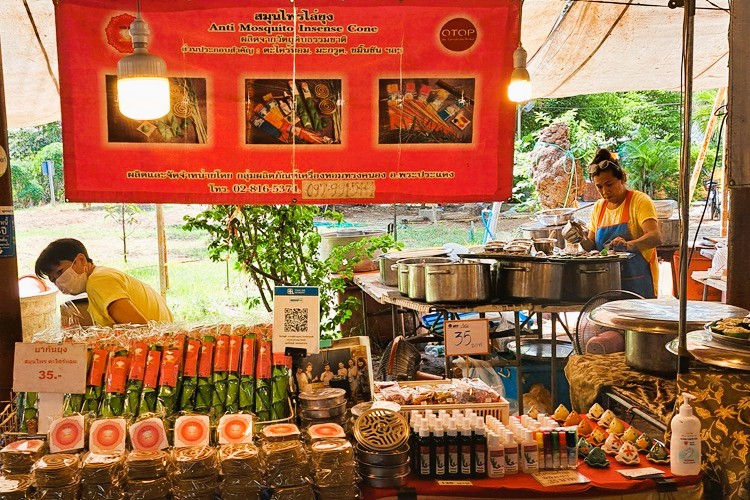
The visit may begin at Bang Nam Phueng Floating Market, a vibrant weekend community market that reflects local agricultural abundance. Here, participants can observe how villagers sell home-cooked dishes, herbal drinks, palm sugar sweets, and fresh produce grown in nearby orchards. Visitors can sample traditional snacks, watch demonstrations of coconut sugar preparation, and engage directly with producers to understand short supply chains and rural-urban food networks.
Embark on a traditional row boat through narrow canals lined with dense nipa palms, to observe and learn about this salt-tolerant plant that is traditionally used for roofing, weaving, and dessert-making. Guides explain the ecological importance of riparian vegetation in preventing soil erosion and supporting aquatic biodiversity. The slow journey through shaded waterways provides insight into the interconnected relationship between settlement patterns and the Chao Phraya River system.
The Nakhon Khuean Khan Park and Botanical Garden is a large protected green space featuring cycling tracks, wetlands, and native plant collections. Participants can cycle along raised paths, observe birdlife, and study local flora within a semi-managed forest ecosystem often describe the park as a model of urban ecological buffering.
Cultural heritage is explored at Khlong Boun Folk Museum, a small but insightful community museum. Exhibits showcase traditional Mon and Thai artefacts, farming tools, household items, and photographs documenting canal-based lifestyles. Through bilingual explanations, participants gain a historical perspective on orchard farming, boat transport, and the evolution of Bang Kachao’s settlements. The museum retains past knowledge that supports ongoing conservation efforts.
Hands-on learning continues with a Wellness Products Workshop, where local entrepreneurs demonstrate how herbs, coconut oil, and floral extracts are transformed into balms, soaps, or inhalers rooted in Thai traditional knowledge. Participants learn about medicinal plants grown in the area and experiment with blending natural ingredients, linking agricultural biodiversity to health-oriented small businesses.
The day can conclude with a Traditional Foot Massage session, offering both experiential relaxation and cultural insight. Practitioners explain the principles of Thai massage, pressure points, and herbal compress techniques, drawing from centuries-old healing traditions. This final activity reinforces the theme of holistic wellbeing embedded in Thai culture — where environment, community, and personal health are interconnected.