
Phra Nakhon

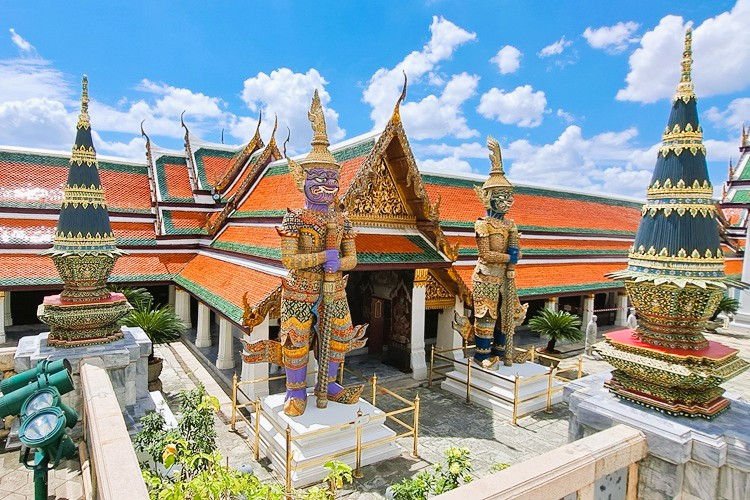

Royal Grand Palace
The Royal Grand Palace is the historic heart of Bangkok and a powerful symbol of the Thai monarchy and nationhood. Established in 1782 by King Rama I, the palace served as the official residence of the Kings of Siam for over 150 years. Its grand architecture reflects traditional Thai design blended with Western influences, mirroring Thailand’s engagement with the outside world while preserving its identity. The complex has also been the setting for important royal ceremonies and state occasions, making it central to Thailand’s political, cultural, and spiritual history.
Wat Phra Kaew (Emerald Buddha Temple)
Wat Phra Kaew, located within the Grand Palace complex, is Thailand’s most sacred Buddhist temple. It houses the Emerald Buddha, a small but deeply revered statue regarded as the palladium of the Thai kingdom and a symbol of legitimacy and prosperity. Unlike other temples, Wat Phra Kaew has no resident monks and functions primarily as a royal chapel. Its richly decorated buildings, murals of the Ramakien (the Thai version of the Ramayana), and ceremonial importance highlight the close relationship between Buddhism, kingship, and national identity in Thai culture.
Wat Arun (Temple of Dawn)
Wat Arun, situated on the west bank of the Chao Phraya River, is one of Bangkok’s most iconic landmarks. Its central prang (tower), decorated with colorful porcelain and seashells, represents Mount Meru, the center of the universe in Buddhist cosmology. Historically, Wat Arun marked the location of the royal temple during the Thonburi period under King Taksin. Its riverside setting and striking silhouette at sunrise and sunset symbolize renewal, resilience, and Bangkok’s long-standing connection to the river.
Wat Pho (Reclining Buddha Temple)
Wat Chetuphon, commonly known as Wat Pho, is famed for its massive Reclining Buddha statue, which represents the Buddha’s entry into Nirvana. Beyond its religious importance, Wat Pho is regarded as Thailand’s first center of public education, preserving knowledge of traditional Thai medicine, massage, and classical arts through inscriptions and illustrations. As a royal temple dating back to the early Rattanakosin period, Wat Pho reflects the role of temples as centers of learning, healing, and spiritual life.
National Museum
The National Museum Bangkok is Thailand’s largest museum and a key institution for understanding the country’s history and cultural development. Housed in former royal residences, it displays artifacts ranging from prehistoric tools to royal regalia and religious art. The museum provides context for Thailand’s diverse cultural influences, including Indian, Khmer, Chinese, and Western traditions. Its collections help connect the heritage sites of the old city by explaining the artistic, political, and religious foundations of Thai civilization.
Maha Rat Street
The Maha Rat Street forms a historic urban corridor linking major royal and religious landmarks near the Grand Palace. Traditionally, this area supported court life through markets, craft workshops, and small family-run shops. Today, heritage shops along these streets preserve traditional trades, foods, and everyday practices that reflect local life in old Bangkok. The area highlights the living heritage of the city, showing how commerce, community, and culture developed alongside royal institutions.
Sala Chalermkrung (Khon Show)
Sala Chalermkrung Royal Theatre is a historic performance venue that plays a vital role in preserving Khon, Thailand’s classical masked dance-drama. Built in the early 20th century during King Rama VII’s reign, the theater reflects a period of modernization while maintaining royal patronage of the arts. Khon performances, based on episodes from the Ramakien, combine dance, music, elaborate costumes, and storytelling, embodying refined court culture and traditional values.