
Rama IX

King Bhumibol Adulyadej
Hailed as the Father of the Nation and the "Development King," King Bhumibol Adulyadej (Rama IX) left an unparalleled legacy through his seven-decade reign, the longest in Thai history. His most significant contributions center on his Sufficiency Economy Philosophy, a middle-path approach to sustainable living that guided Thailand through various economic crises and remains a cornerstone of national policy today. A true "People's King," he initiated over 4,000 Royal Development Projects that revolutionized water management, soil conservation, and agricultural techniques in the country's most remote regions. Beyond his humanitarian work, his achievements as an "International Inventor" were globally recognized; he held patents for the Chaipattana Aerator for wastewater treatment and the "Sandwich" rainmaking technology to combat droughts.
The National Archives in Honour of His Majesty King Bhumibol Adulyadej
Established by the Fine Arts Department to commemorate the Golden Jubilee (50th anniversary) of his reign in 1996, the complex features four interconnected buildings designed in elegant applied Thai architecture. Visitors can explore permanent exhibitions that chronicle the King's biography, royal duties, and projects he initiated to improve the lives of his subjects. The archives are a treasure trove for researchers and the public alike, housing a vast collection of the King’s personal writings, musical compositions, paintings, and a massive gallery of his own photography. Beyond historical records, the facility preserves thousands of audiovisual recordings, including the King's speeches and even original jazz recordings, ensuring that the "Strength of the Land" remains a living inspiration for future generations.
Supreme Artist Hall
This msueum stands as a vibrant tribute to the immense creative legacy of King Bhumibol Adulyadej and Thailand’s most esteemed National Artists. The museum’s primary galleries are dedicated to the King’s mastery across nine distinct fields, ranging from literature and architecture to his expressive oil paintings and rare photography that captured both the intimacy of the Royal Family and the breadth of his development projects. A central highlight of the hall is his musical legacy, showcasing the original jazz compositions and instruments of a monarch who was a world-renowned saxophonist. Beyond the King’s personal works, the hall honors the "National Artists" of Thailand through multimedia displays that celebrate their masterpieces in the performing and visual arts. By utilizing modern interactive technology and light-and-sound displays, the museum seamlessly weaves together the artistic history and cultural heritage.
King Rama VIII Park
The park’s most prominent feature is the Royal Monument of King Rama VIII, a larger-than-life bronze statue that stands roughly three times the King’s actual size. Positioned on a pedestal that matches the height of the Rama VIII Bridge’s railing, the statue gazes across the river toward the historic Rattanakosin district. Beneath this monument lies a dedicated museum and multi-purpose hall that chronicles the life, royal duties, and contributions of the young monarch, offering visitors a deeper understanding of his reign.
Rama IX Museum
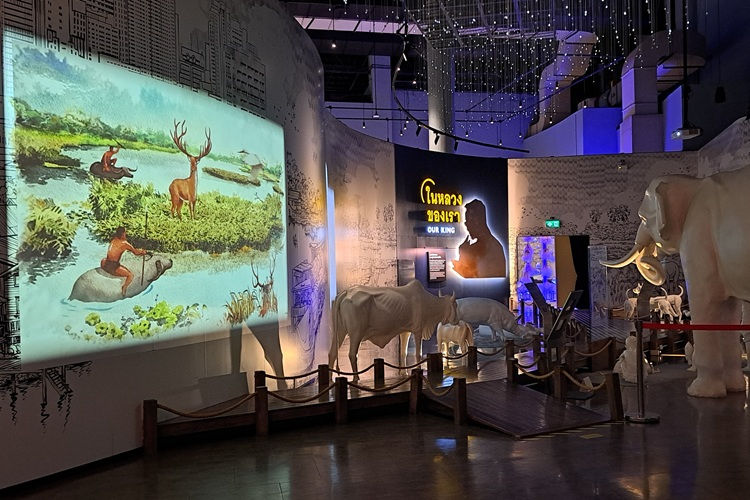
The museum’s massive facility is seamlessly organized into three major zones - Our Home,Our Life, and Our King - which collectively explore the origins of the universe and the intricate diversity of Thailand’s ecosystems. At the heart of the experience is the "Our King" zone, where interactive displays detail the King's sustainable development projects, including his pioneering work in soil and water management, rainmaking technology, and the "Sufficiency Economy" philosophy. This narrative is brought to life through immersive, walk-through simulations of Thailand's biomes, such as peat swamps and rainforests, illustrating his dedication to forest conservation. Architecturally, the museum is defined by its iconic "Three Cubes" design, symbolizing the balance between Earth, humans, and knowledge, while its global perspective elevates the King’s local initiatives to show their relevance in addressing cuurent and future worldwide environmental challenges.
Royal Development Projects and Security Coordination Centre
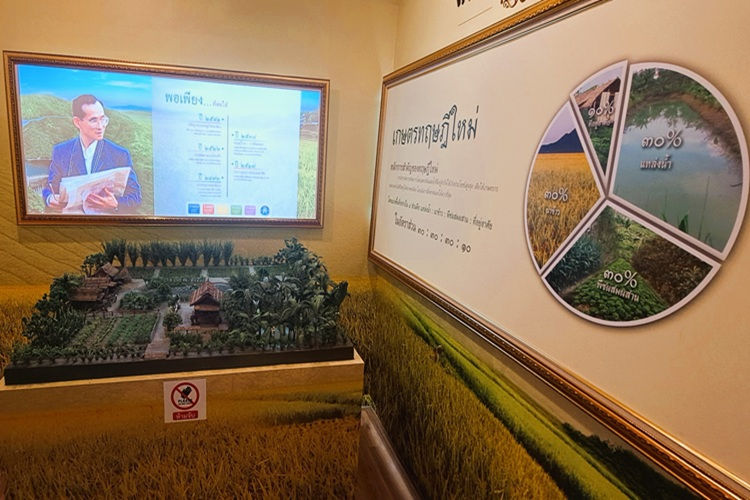
This unique military-run institution that highlights the vital intersection of national security and social development. Established in 2008 under the Royal Thai Armed Forces, the centre serves as a strategic operations base for royal initiatives aimed at improving the quality of life in remote and border areas, rooted in the belief that true national security is achieved through sustainable livelihoods. This mission is brought to life through an interactive gallery on the ground floor, which features extensive exhibitions on King Bhumibol’s Sufficiency Economy Philosophy and iconic projects such as "Royal Rainmaking" and "Monkey Cheek" flood control. Visitors can further explore these concepts at Baan Phor Pieng, a two-rai agricultural learning centre within the headquarters that acts as a living model for the "New Theory" of self-sufficient farming. By showcasing how the military supports "Food Bank" initiatives—teaching animal husbandry and fisheries to villagers—the centre effectively demonstrates its dual role in ensuring both food security and regional stability through royal wisdom.