
Rama VI, VII


King Vajivarduth
Called the Father of Thai Nationalism, his reign between 1910 - 1925 played a pivotal role in shaping modern Thai identity by fostering a shared sense of nationhood, loyalty, and civic consciousness. He introduced Western political ideas while reaffirming Thai cultural pride through the promotion of the Tricolour Flag - representing Nation, Religion, and Monarchy, as the moral foundation of society. He used literature, drama, and journalism as powerful tools to cultivate patriotism, writing extensively to popularize concepts of citizenship, unity, and public duty. Through these reforms, he laid the intellectual and cultural groundwork for a cohesive Thai nation-state in the early twentieth century.
King Vajivarudh Memorial Hall
This museum honors the life and prolific contributions of King Rama VI. The center is a vital repository for the King’s extensive literary works, personal artifacts, and historical documents that detail his role in fostering Thai nationalism. Architecturally significant, the hall acts as both a research hub for scholars and a commemorative space that preserves the "Father of Thai Nationalism’s" vision for a modern, educated Siam. Visitors to this site can explore exhibits that trace the King's journey from his education in England to his establishment of the Wild Tiger Corps and the Thai Boy Scouts, providing a deep dive into the intellectual foundations of the modern Thai state.
Wild Tiger Corps Museum
Located within the historic Territorial Defense Command in Bangkok, the King Vajiravudh Museum preserves the legacy of the Wild Tiger Corps, a paramilitary organization established by King Rama VI in 1911 to foster national unity and chivalry. The museum features an impressive collection of original uniforms, royal military gear, and rare photographs that illustrate the King's vision for a modern Thai identity. The site offers a unique perspective on the evolution of Thailand’s national defense within a striking neoclassical setting.
King Prajadhipok (Rama VII)
Reigning from 1925–1935, this monarch is known as the Father of Thai Democracy for his role in navigating Siam's transition from an absolute monarchy to a constitutional one. During a severe global economic depression he took early steps toward reform, by establishing the Supreme Council of State and the Committee of the Privy Council to experiment with parliamentary-style deliberation. To avoid bloodshed during a the Siamese Revolution of 1932, he chose to sign the country's first permanent constitution. His legacy is immortalized by his 1935 abdication statement, in which he declared his willingness to surrender his powers "to the people as a whole" rather than to any specific group, a sentiment that remains a cornerstone of Thai democratic identity today.
King Prajadhipok Museum
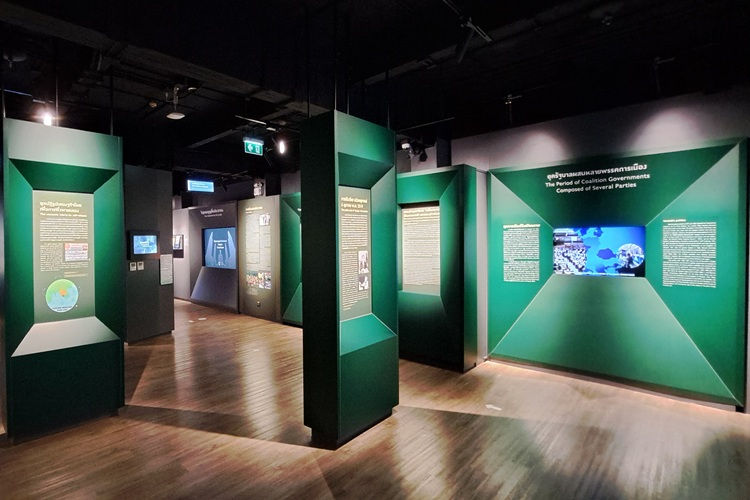
The museum showcases his contributions to the country’s transition from absolute monarchy to a constitutional system, highlighting his efforts in promoting civic responsibility, social reform, and political modernization. Through a rich collection of personal artifacts, photographs, documents, and multimedia exhibits, visitors gain insight into his vision for Thailand, his dedication to the nation, and the historical context of early 20th-century Thai politics. The museum serves both as an educational center and a tribute to a monarch whose commitment to democratic principles continues to inspire.
Democracy Learning Center
The Democracy Learning Center provides an interactive space for students, scholars, and the public to explore democratic principles and civic engagement in Thailand. Through multimedia displays, workshops, and role-playing simulations, visitors gain hands-on understanding of the rights and responsibilities of citizens in a parliamentary democracy. By connecting historical events with contemporary governance, the center underscores how democratic literacy fosters informed participation, strengthens civil society, and contributes to nation-building through responsible citizenship.