
Nakhon Pathom
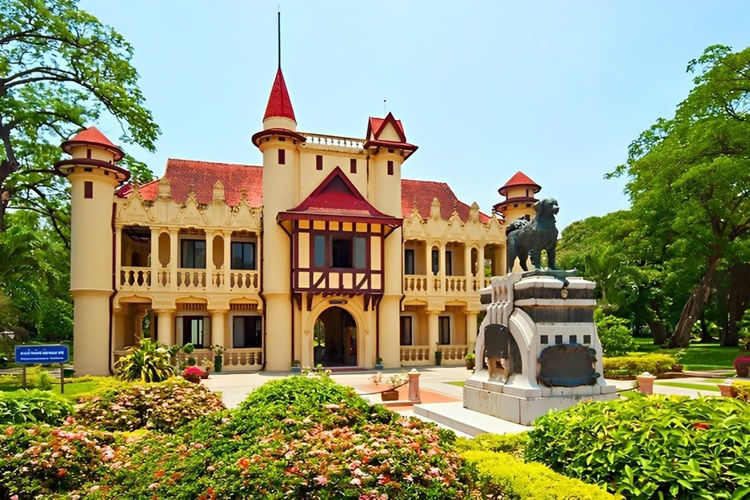
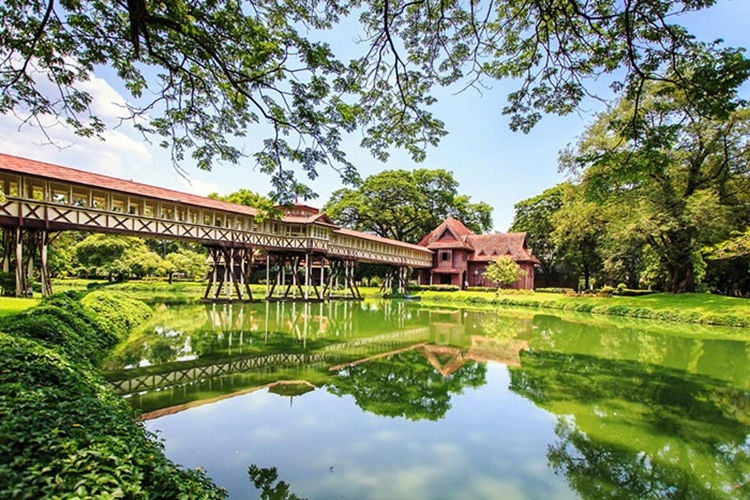
Sanam Chandra Palace
Commissioned by King Vajiravudh (Rama VI), the palace began to take shape in the early twentieth century, when he was still Crown Prince. It was conceived as a royal residence outside Bangkok and was closely associated with his interest in Nakhon Pathom and the restoration of Phra Pathom Chedi. The complex of throne halls and residences is particularly significant for its combination of Western architectural influences with Thai architectural traditions, reflecting the cultural and architectural developments of the early Rattanakosin period. Government sources identify the palace as an important cultural site, while Silpakorn University has subsequently made the grounds an important centre for education and the arts in Nakhon Pathom. Its heritage value therefore extends beyond its function as a former royal residence, preserving evidence of the architectural, cultural and intellectual developments associated with the Siamese monarchy in the early twentieth century.
Wat Phra Pathom Chedi
Regarded as one of Thailand's most important Buddhist monuments, the enormous chedi is deeply associated with Nakhon Pathom's identity as an early centre of Buddhism. Thai government sources connect the monument with the long history of Buddhism in the region, while archaeological and historical research associated with Silpakorn University places the earlier monument within the development of Buddhist architecture and belief in ancient Nakhon Pathom. The present structure is principally associated with the major rebuilding undertaken during the reign of King Mongkut (Rama IV), who constructed the monumental outer chedi over the earlier structure. The complex has continued to function as a living religious centre and contains important Buddha images and traditions associated with Buddhist relics and the Thai monarchy. Its heritage importance consequently lies in the continuity it represents between ancient Buddhist traditions, the Dvaravati cultural landscape, nineteenth-century royal restoration and contemporary religious practice.
Phra Pathom Chedi Museum
Established to preserve and interpret the archaeological heritage of Nakhon Pathom, the museum has its origins in the collection of antiquities from the ancient Nakhon Pathom area during the reign of King Chulalongkorn (Rama V). According to the Fine Arts Department, antiquities were initially gathered and displayed in the vicinity of Phra Pathom Chedi before a dedicated museum was established, with the institution subsequently becoming a national museum in 1934. The present museum building was constructed in 1967. Its collections contain substantial archaeological evidence from the Dvaravati period, an important phase in the cultural and religious history of central Thailand. The museum therefore has heritage significance not simply as a repository of artefacts, but as an institution documenting the archaeological study and preservation of Nakhon Pathom's past and demonstrating the area's importance as a major centre of early Buddhist culture and Dvaravati civilisation.
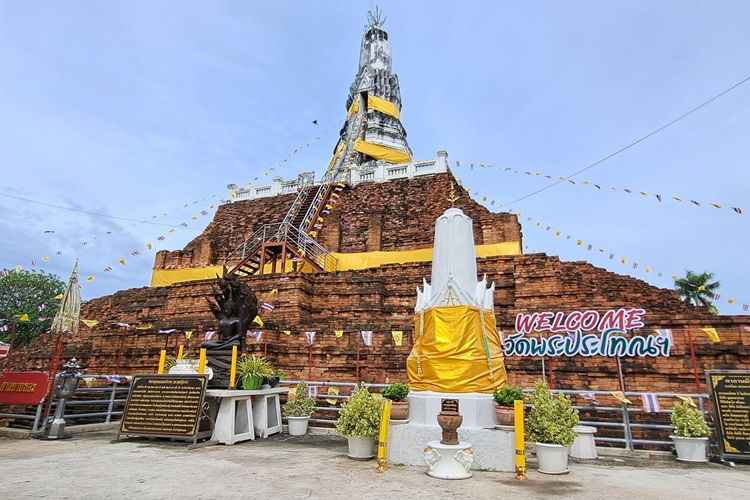
Wat Phra Prathon Chedi
Located within the archaeological landscape of ancient Nakhon Pathom, the temple preserves substantial evidence of the area's Dvaravati-period Buddhist heritage. Archaeological information from the Fine Arts Department identifies a large brick-and-earth stupa beneath the later structure, together with archaeological remains including stucco decoration. The site subsequently underwent architectural changes and restoration during later historical periods, giving the monument a layered character that reflects the continuing religious importance of the location. Local traditions preserved by Nakhon Pathom's authorities also associate the site with the ancient community of Prathon. Its heritage importance therefore derives from the combination of archaeological evidence, architectural development and continuing Buddhist practice, providing an important link between the ancient history of Nakhon Pathom and the later religious landscape of the region.
Wat Huai Tako & Folk Cultural Centre
Rather than focusing primarily on monumental architecture or ancient archaeological remains, the site provides an important record of local community heritage and everyday cultural practices. Documentation from Christian University of Thailand describes the folk museum as a centre established to preserve and present the life and culture of the local Phaniat community. Its collections and displays include traditional domestic life, kitchens, textiles, medicines, Buddhist materials, books and historical objects, alongside themes relating to religion and the community's cultural traditions. Government tourism information also records the site's historical association with an earlier temple and its subsequent restoration. Its heritage significance consequently lies in the preservation of living local heritage – including material culture, religious traditions, traditional knowledge and community memory.