
Craft

Chang Khien (Drawing and Painting)
The foundation of all Thai art begins with Chang Khien. These two-dimensional expressions of Thai identity are most vividly embodied in the intricate Lai Thai patterns and the flickering, flame-like Kranok motifs.Most famously seen around the Royal Grand Palace and various temples, these murals use mineral pigments to depict the life of the Buddha or scenes from the Ramakien. They illustrate sacred manuscripts and serve as a design guide for craftsmen in other guilds to follow.
Chang Pan (Sculpting & Modeling)
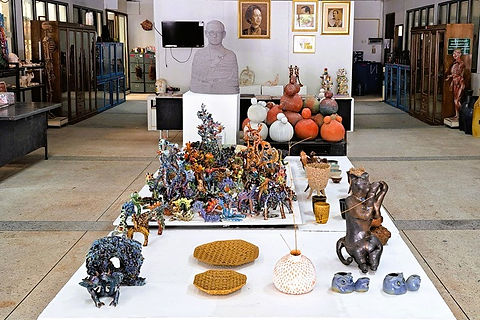
Masters of form and volume, they work with malleable materials like clay, wax, or even a traditional mixture of lime and sand to model three-dimensional figures. This stage is critical because it creates the "soul" of a piece before it is cast in metal. Whether they are modeling a delicate celestial dancer or a colossal guardian, these sculptors must have a deep understanding of anatomy and religious iconometry to ensure every curve conveys the appropriate spiritual emotion.

Chang Gae Salak (Carving)
Focusing on hard materials, artisans transform wood, stone, and ivory into intricate masterpieces. Using a variety of chisels and mallets, they are responsible for the breathtaking relief carvings found on temple doors, gables, and royal furniture. In Thailand, teak is the preferred medium due to its durability, allowing carvers to execute "through-carving" techniques where the wood is hollowed out into a lace-like transparency that seems to defy the weight of the material.

Chang Hun (Modeling and Puppetry)
A specialized form of modeling that focuses on structural skeletons and mechanical figures. These craftsmen are the architects of the Hun Lakon Lek (traditional puppets) and the royal funeral chariots. Their skill lies in creating internal frameworks that allow for movement or support great weight. They ensure that a puppet’s joints move with the grace of a human dancer or that a ceremonial structure is perfectly balanced, blending engineering with high art.

Chang Lor (Casting)
This artform is most often associated with the creation of Buddha images. Using the "lost-wax" casting method, these artisans manage the intense heat of the forge to melt bronze, gold, or brass. It is a high-stakes craft where a single crack in the mold can ruin months of preparation. The casting of a major Buddha statue is often treated as a sacred ritual, requiring the master caster to balance technical precision with spiritual devotion to ensure the metal fills every crevice of the mold.

Chang Salak (Engraving and Patterning)
Focuses on "patterning" softer media that includes fruit and vegetable carving, as well as the engraving of hides for Nang Yai (giant shadow puppets). They also specialize in banana stalk carving (Khaen Yuak), a unique Thai funeral art where intricate patterns are sliced into the white pith of the stalk to decorate cremation pyres. Their work is defined by speed, precision, and an lightness of touch.

Chang Glung (Turning)
This involves the use of a lathe to create perfectly symmetrical, circular objects. These craftsmen produce the elegant, tapering pillars of traditional houses, the handles of ceremonial weapons, and various religious containers. By rotating wood or ivory against a sharp tool, they create smooth, rhythmic contours and stepped ridges that are hallmarks of Thai decorative objects. It is a craft that celebrates the beauty of geometry and the natural grain of the wood.

Chang Rak (Lacquering)
These artisans are the finishers who provide Thai art with its protective, glossy skin. Using the sap of the Rak (lacquer) tree, they apply multiple layers to a surface, sanding each one to a mirror finish. This guild is responsible for the famous Lai Rot Nam (gold leaf on black lacquer) technique. By applying a water-sensitive stencil over the black resin, gold leaf is applied to specific areas, leaving behind shimmering designs that can last for centuries.
Chang Bu (Metal Beating)
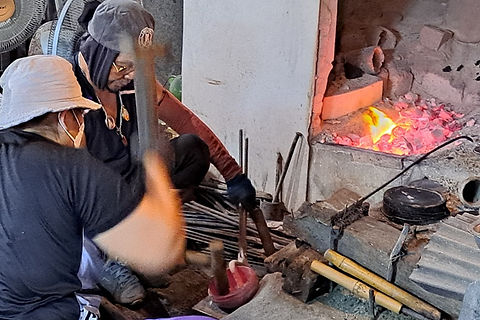
The art of transforming flat sheets of metal into three-dimensional objects through sheer physical force. By hammering gold, silver, or copper sheets over a mold or a bed of pitch, they create "repoussé" designs where the patterns are pushed out from the back. This technique is used to create ornate monk's bowls, ceremonial platters, and the decorative plating for temple spires. It requires a rhythmic, steady hand to thin the metal without ever piercing through it.
Chang Poon (Plastering)
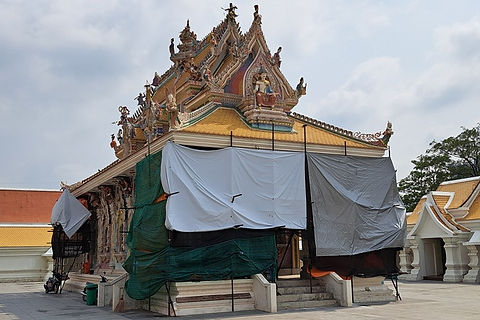
Stucco masters who define the exterior of Thai architecture, they use a special mixture of lime, quartz sand, and organic binders (like sugar or seaweed) to create a durable plaster that can be molded into ornate decorations. From the guardian giants at temple gates to the swirling clouds on a pagoda's base, these craftsmen ensure that the very walls of a structure are as expressive and detailed as a fine piece of jewelry.