
Music
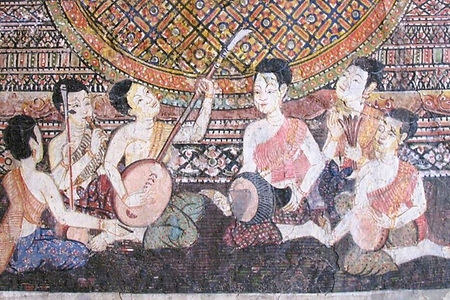
The roots of Thai music predate recorded history, originating in local animistic rituals and folk traditions where music played an integral role in spiritual and communal life. Over the course of history, music was more than merely a chronicle of sound, but a record of the political, religious, and social evolution of the nation.
From the Indian tradition came foundational concepts of musicology, tonal organization, and the introduction of instruments such as the phin (lute), along with complex rhythmic systems. From the Khmer, Thai music inherited refined courtly protocols, ceremonial functions, and sophisticated performance standards.
By the Sukhothai period, these influences had begun to coalesce into a distinct musical identity, particularly within royal and religious contexts. This development continued during the Ayutthaya era, when music became more structured and closely intertwined with court rituals, theatre, and classical dance. After the fall of Ayutthaya, the subsequent Rattanakosin period saw a revival of Thai music under strong royal patronage.

Piphat
Characterized by its powerful, energetic sound, the Piphat is the most dynamic and percussion-heavy of Thailand's classical ensembles. It is anchored by hard-wood and bamboo xylophones (ranat) and circular gong chimes (khong wong), all pierced by the sharp, distinct wail of a double-reed oboe (pi). Historically, they were essential for accompanying solemn royal ceremonies, traditional shadow plays, and grand Khon masked dance dramas.

Khrueang Sai
Meaning "string ensemble," it gracefully weaves together bowed string instruments like the high-pitched saw duang and mellow saw u fiddles alongside the plucked zither (jakhe), all supported gently by the breathy notes of a vertical bamboo flute (khlui). Favored for indoor entertainment in aristocratic settings, its soft acoustic profile allows these intricate melodies to shine beautifully as background entertainment.

Mahori
As a beautiful hybrid of the previous two traditions, the Mahori ensemble seamlessly bridges the gap between the percussive focus of Piphat and the delicate strings of Khrueang Sai. Historically performed exclusively by women within the inner chambers of the royal court, this style scales down the loudest percussion instruments and blends them with strings to create a soft, highly balanced, and refined sound.

Northern Folk
The Salor-Sueng is named after a bowed fiddle crafted from a coconut shell, and a plucked lute - produces a fluid, breezy sound that mirrors the graceful pacing of traditional Northern folk dances. In contrast, the Glong Sabat Chai offers a dramatic and highly physical performance centered around massive drums that were once used in wartime. Today, it's a vibrant spectacle, with performers striking drums with sticks, elbows and knees.

Northeastern Folk
Mor Lam features rapid-fire, improvised poetic lyrics, typically accompanied by the khaen (a bamboo mouth organ), and addresses themes of love, hardship, and daily life, reflecting the cultural identity of the region. While Kantrum has a distinctive, driving rhythm both often blend modern bass and drums that create concert-style festivals.

Central Folk
Lamtad and Pleng Chachoey are formats of witty, call-and-response vocal dialogues. Teams of men and women take turns singing improvised, rhyming verses to outsmart each other, often filled with double entendres, backed only by a simple hand drum called a rammana.

Southern Folk
Nang Talung and Menora Music are designed specifically to drive theatrical performances (shadow puppetry and dance-dramas). It relies heavily on urgent, complex drumming patterns from the glong thap (hourglass-shaped goblet drums) paired with a high-pitched, wailing pi (oboe) and rhythmic bronze cymbals.

Contemporary Thai
Blending regional traditions with rock, pop, and electronic influences, has created a vibrant live music culture in Thailand. Influential bands such as Carabao, whose socially conscious “songs for life” style helped define modern Thai rock and continues to inspire younger musicians. Alongside are energetic folk featuring amplified music, dance troupes, neon stage productions, hip-hop influences, and bass-heavy arrangements attract large audience participation.