
Charoen Krung
Bang Rak Commercial Legacy
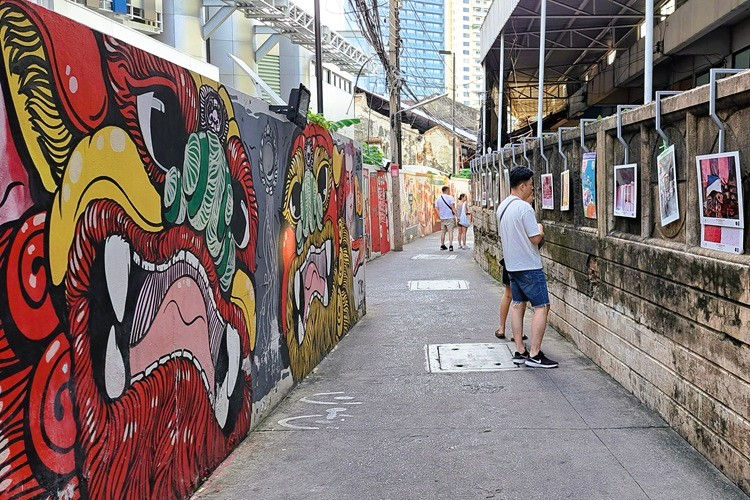
The area developed as one of Bangkok's important commercial districts during the expansion of the city beyond the original Rattanakosin core, with trade, international communities and new forms of urban development shaping its character. Research from Chulalongkorn University identifies Bang Rak as an old, multicultural commercial district in which Chinese, Indian, Western and Thai communities created distinctive forms of ordinary urban heritage, including shophouses, narrow lanes and sacred places. These buildings and spaces are significant because they record the everyday commercial life of Bangkok rather than only its royal or monumental history. The district's heritage value is consequently found in the combination of architecture, commerce, religious diversity and community life, demonstrating how Bangkok developed as an international trading city and how different cultural groups established enduring places within the urban landscape.
Talad Noi Artisan Heritage
The community developed as an important riverside port and maritime-trade area during the early Rattanakosin period, attracting Chinese merchants and crews who settled in the area and established a distinctive Thai-Chinese community. Research from Chulalongkorn University identifies its heritage character as a combination of tangible and intangible elements, including historic houses, shrines, streets, traditional occupations, religious practices and collective memory. The area's identity was particularly shaped by maritime commerce and craft-based activities, while generations of residents maintained cultural practices influenced by both Chinese and Thai traditions. Contemporary Bangkok authorities continue to identify the neighbourhood as an important centre of Thai-Chinese culture and community-based tourism. Its heritage significance therefore lies in the survival of a living historic neighbourhood, where traditional architecture, artisanal practices, religious beliefs and community relationships remain interconnected rather than existing solely as preserved monuments.
Song Wat Historic Trade
The riverside corridor developed as an important commercial area because of its proximity to the Chao Phraya River and its role in receiving and distributing goods arriving from overseas. Bangkok's Samphanthawong District describes the area as a former important trading district and a location where goods from abroad were loaded and unloaded, while the historic Lao Pun Tao Kong shrine has served as a centre of faith for the Thai-Chinese community since the early Rattanakosin period. The survival of traditional shophouses, Chinese religious sites and commercial buildings reflects the relationship between trade, migration and community formation that shaped this part of Bangkok. Its heritage value therefore comes from the combined commercial and social landscape: the architecture records the physical infrastructure of trade, while the shrines and surviving businesses preserve the cultural traditions of the communities that developed around the trading economy.
Sampheng Lane Market
The narrow lanes of this historic commercial quarter form one of the oldest and most important elements of Bangkok's Chinatown. Chulalongkorn University research records that Chinese settlers established businesses in Sampheng and that the area became an important trading centre, with commerce initially connected to river transportation before expanding alongside Bangkok's growing road network. Another Chulalongkorn study identifies Sampheng Lane as the historic commercial axis of Chinatown and notes its continuing importance for wholesale trade. The area's dense lanes and shophouses are therefore more than a market environment: they represent the urban form created by generations of Chinese migration, entrepreneurship and commercial activity. Its heritage importance lies in the continuity of this trading landscape and in the way it preserves the relationship between commerce, community and the physical structure of historic Chinatown.
Yaowarat Street Food
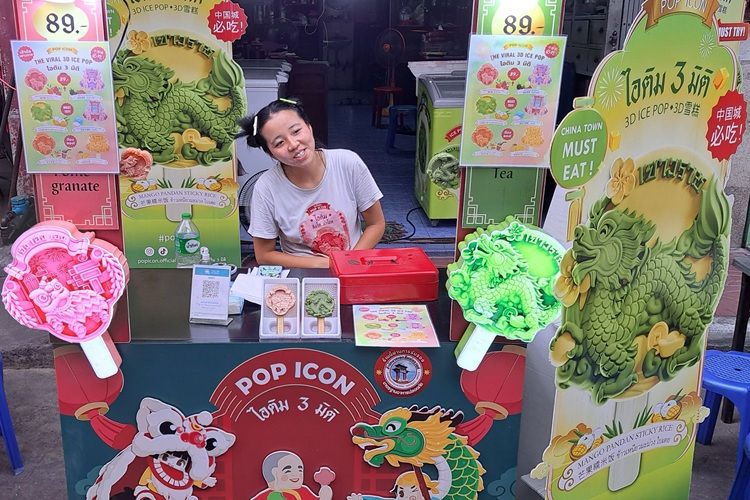
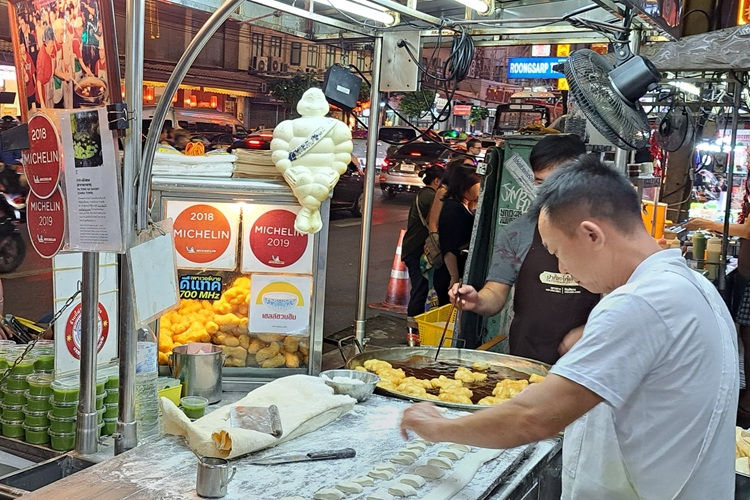
The area's food culture developed alongside the growth of Bangkok's Chinese community and the transformation of Yaowarat into one of the city's major commercial centres. Chulalongkorn University's Arc of Memory research describes Yaowarat as a continuing centre of Chinese food, crafts and religious traditions, with recipes and culinary practices passed down through generations of immigrant families. Many food businesses retain specialised dishes and methods associated with particular family or community traditions, while the concentration of markets, restaurants and street stalls creates a distinctive food landscape that remains active after dark. Academic research has also documented the long-term presence of street-food vendors and family businesses in the area, illustrating the connection between food production, residence and commerce. Its heritage significance therefore lies in culinary heritage as a living tradition: food functions as a vehicle through which Thai-Chinese identity, family knowledge, migration history and community memory continue to be transmitted.
Chinatown Heritage Centre
Situated within the Wat Traimit complex, the centre provides an interpretive introduction to the history and cultural development of Bangkok's Chinatown. Chulalongkorn University's Arc of Memory research identifies the museum as a place where multimedia interpretation presents the history of Yaowarat and places it within the wider architectural and cultural landscape of the Chinese community. This interpretive role is significant because Chinatown's heritage is not represented solely through individual monuments: its history encompasses migration, trade, religious practices, food traditions, crafts, markets and the development of shophouse neighbourhoods. The centre therefore contributes to heritage preservation by documenting and explaining the historical processes that created the contemporary Thai-Chinese community, helping connect individual sites such as temples and markets with the wider history of Yaowarat.
Wat Traimit (Golden Buddha)
The temple is particularly renowned for housing the Phra Phuttha Maha Suwana Patimakon, a monumental seated Buddha image made almost entirely of solid gold and executed in the Sukhothai artistic tradition. The Tourism Authority of Thailand identifies the image as the world's largest solid-gold Buddha statue and notes that it is now housed in the temple's Phra Maha Mondop. Its importance extends beyond its extraordinary material value: the image represents the sophistication of Sukhothai Buddhist sculpture and has become a major religious symbol within the historic Thai-Chinese district surrounding Yaowarat. The temple itself is also closely integrated with the history of Bangkok's Chinatown, and Chulalongkorn University identifies it as one of the area's major cultural and architectural landmarks, alongside the Chinatown Heritage Centre. Its heritage significance consequently connects Thai Buddhist art, religious devotion and the history of the Chinese community, making it an important cultural landmark within the wider Chinatown heritage landscape.